
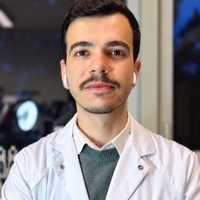
Thesis – Joey ABOU-CHAAYA
Multi-omics characterization of a neural stem cell niche in the human spinal cord: organization, heterogeneity, and strategy for ependymal cell isolation
Jury
- Nicolas WANAVERBECQ, Professor, Aix-Marseille University, Marseille – Reviewer
- Pascale VARLET, Professor-Hospital Physician, University of Paris Cité, Paris – Reviewer
- Nicolas GUEROUT, Professor, SPPIN, Paris – Examiner
- Olivier RAINETEAU, Research Director, SBRI, Lyon – Examiner
- Luc BAUCHET, Professor-Hospital Physician, Montpellier University Hospital – Thesis director
- Jean-Philippe HUGNOT, Professor, IGF, Université de Montpellier – Co-supervisor
Summary
The adult human spinal cord central canal (CC) contains a persistent population of ependymal cells displaying developmental and progenitor-associated features, yet its molecular organization, heterogeneity, and experimental accessibility remain poorly characterized. This thesis aimed to characterize the human CC niche, identify cell-surface markers for ependymal cell isolation, and establish experimental models for their study using an integrated multi-omics approach combining quantitative proteomics, high-resolution spatial transcriptomics, and RNA sequencing of freshly purified cells. Proteomic and spatial transcriptomic analyses revealed a clear molecular distinction between the CC and surrounding parenchyma. The CC showed strong ependymal, ciliogenesis, RNA-processing, and cell-cycle-associated signatures, while the surrounding tissue was enriched in myelin, neuronal, and metabolic programs. Spatial transcriptomics further identified previously unrecognized CC heterogeneity, including a ventral FOXA1⁺ population expressing developmental factors such as LMX1B and FERD3L. Integration of proteomic and spatial datasets identified CD36 and FOLR1 as candidate surface markers, which were validated and used to enrich ependymal populations from fresh spinal cord tissue. These populations displayed strong ependymal and motile cilia programs with reduced immune, oligodendroglial, and proliferation-associated signatures. Together, these findings provide a molecular and experimental framework for studying the human spinal cord CC niche and its ependymal cell populations.


Leave A Comment