
Brain cancers
Gliomas are primary brain tumors that arise from glial cells, the supportive cells of the central nervous system. They are classified into low-grade gliomas and high-grade glioblastomas. Gliomas account for 190,000 – 250,000 new cases/year worldwide and 4,300 – 4,500 new cases/year diagnosed in France.
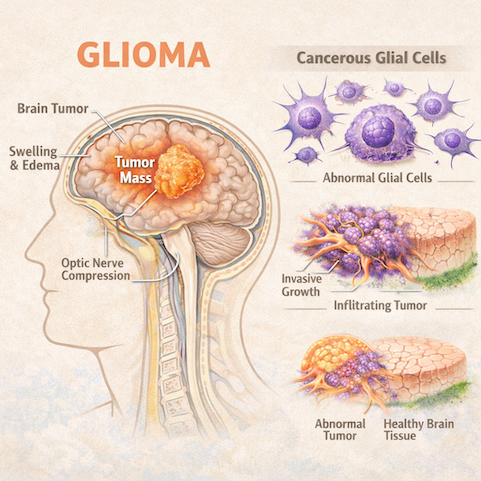
/ Description
Gliomas are tumors that arise from glial cells in the central nervous system, which support and protect neurons. They can occur anywhere in the brain or spinal cord.
Gliomas are classified by:
- cell type
- astrocytomas
- oligodendrogliomas
- grade
- high-grade (rapid onset and severe symptoms)
- low-grade (more subtle manifestation and slower progression)
/ Symptoms
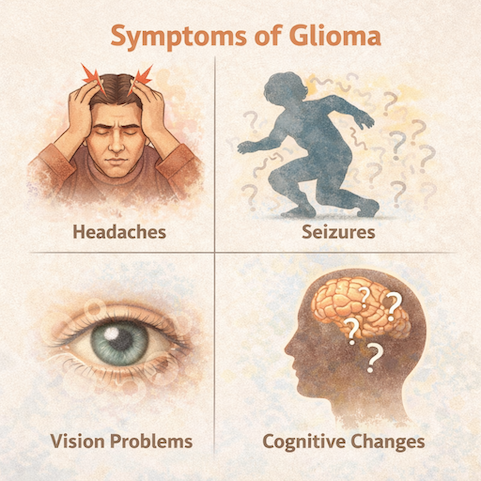
● Headaches, often worsening in the morning or with activity
● Seizures
● Focal neurological deficits: weakness, numbness, speech difficulties, or coordination problems
● Cognitive and personality changes: memory loss, confusion, mood swings
● Nausea and vomiting due to increased intracranial pressure
● Vision or sensory changes depending on tumor location
/ Diagnosis
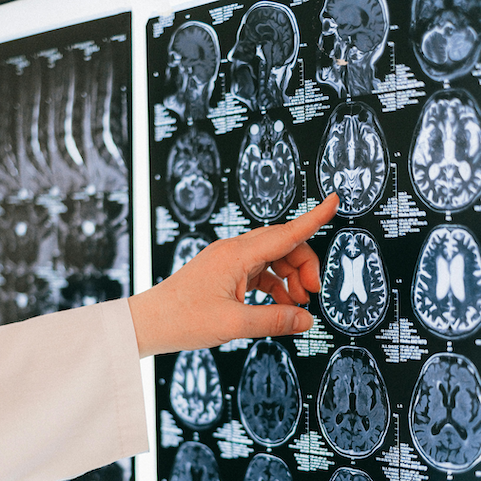
● Magnetic Resonance Imaging (MRI): The gold standard for detecting and characterizing gliomas
● Computed Tomography (CT): Useful for rapid assessment or when MRI is not available
● Histopathological examination: Biopsy or surgical specimen to determine tumor type and grade
● Molecular testing: Identifying genetic markers to guide prognosis and treatment
● Neurological assessment: Evaluating cognitive, motor, and sensory function to localize tumor effects
/ Treatment options
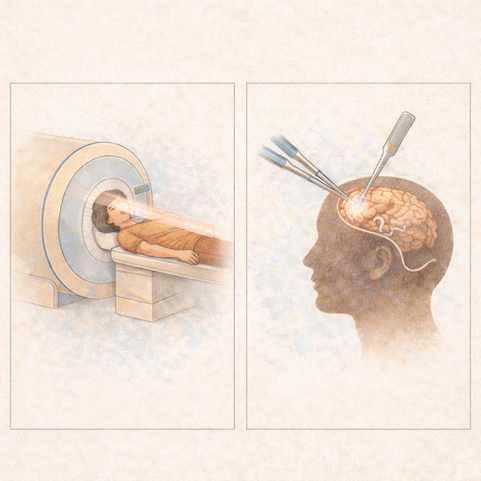
Treatment is usually multimodal, combining surgery, radiotherapy, and chemotherapy, tailored to tumor grade, molecular features, and patient condition.
- Surgery: Maximal safe resection to remove as much tumor as possible while preserving neurological function. Often the first-line treatment, especially for accessible tumors
- Radiotherapy: Commonly used after surgery for high-grade gliomas or inoperable tumors; control tumor growth and improve survival
- Chemotherapy: Temozolomide is the standard drug for high-grade gliomas (e.g., glioblastoma). Other agents may be used based on tumor type and molecular profile
- Targeted and experimental therapies: for tumors with specific mutations, clinical trials may include immunotherapy, gene therapy, or novel therapeutic agents
/ Research and support
Glioma research is progressing, and recent studies are focusing on:
● The development of new models for in vitro laboratory studies
● The development and investigation of new targeted therapies and immunotherapies
● The identification of new biomarkers of the disease and of response to treatment
● Improvements in surgical techniques for for tumor removal and quality of life
● Understanding the mechanisms of infiltration and migration, as well as responses to and resistances against treatments
Support and associations
Several associations offer invaluable support to patients and their families:
● The Association for Research on Brain Tumors (ARTC) and Association for Research on Brain Tumors Sud (ARTC Sud) funds basic, clinical and epidemiological research into brain tumours
● Des étoiles dans la mer – Vaincre le Glioblastome supports people living with glioblastoma, a particularly aggressive form of brain cancer, and their families
/ Glioma research at the IGF
At the IGF, researchers are conducting pioneering research to understand the mechanisms involved in this complex condition, identify biomarkers and risk factors, and propose new therapeutic approaches. In particular, we are establishing a biobank of patient samples in order to make new discoveries regarding the biology and heterogeneity of gliomas.
Find out more about the projects of: